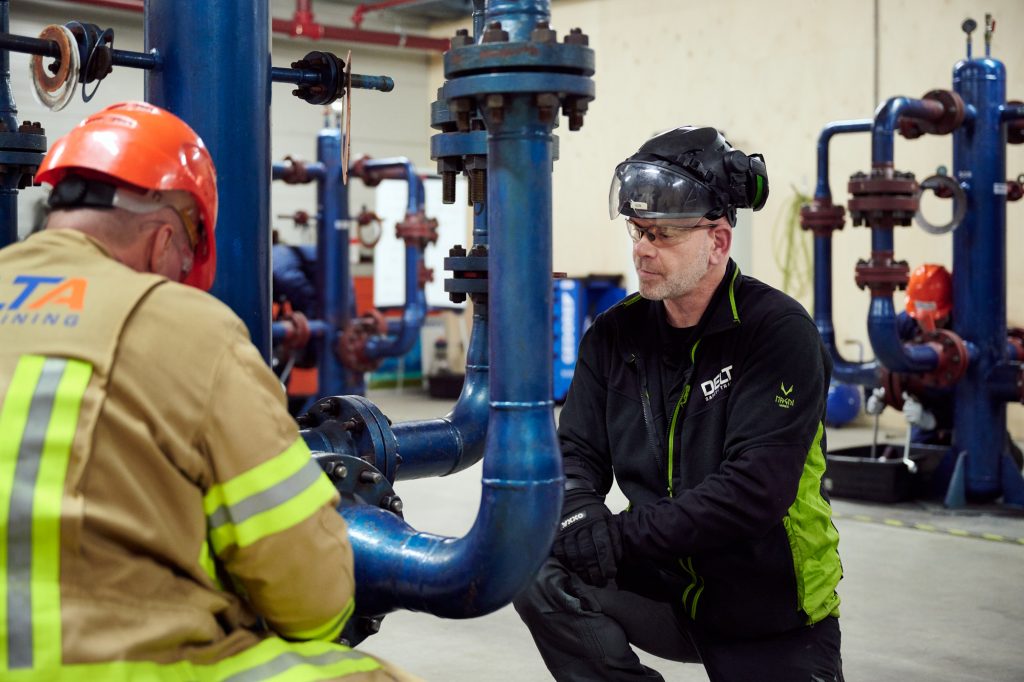
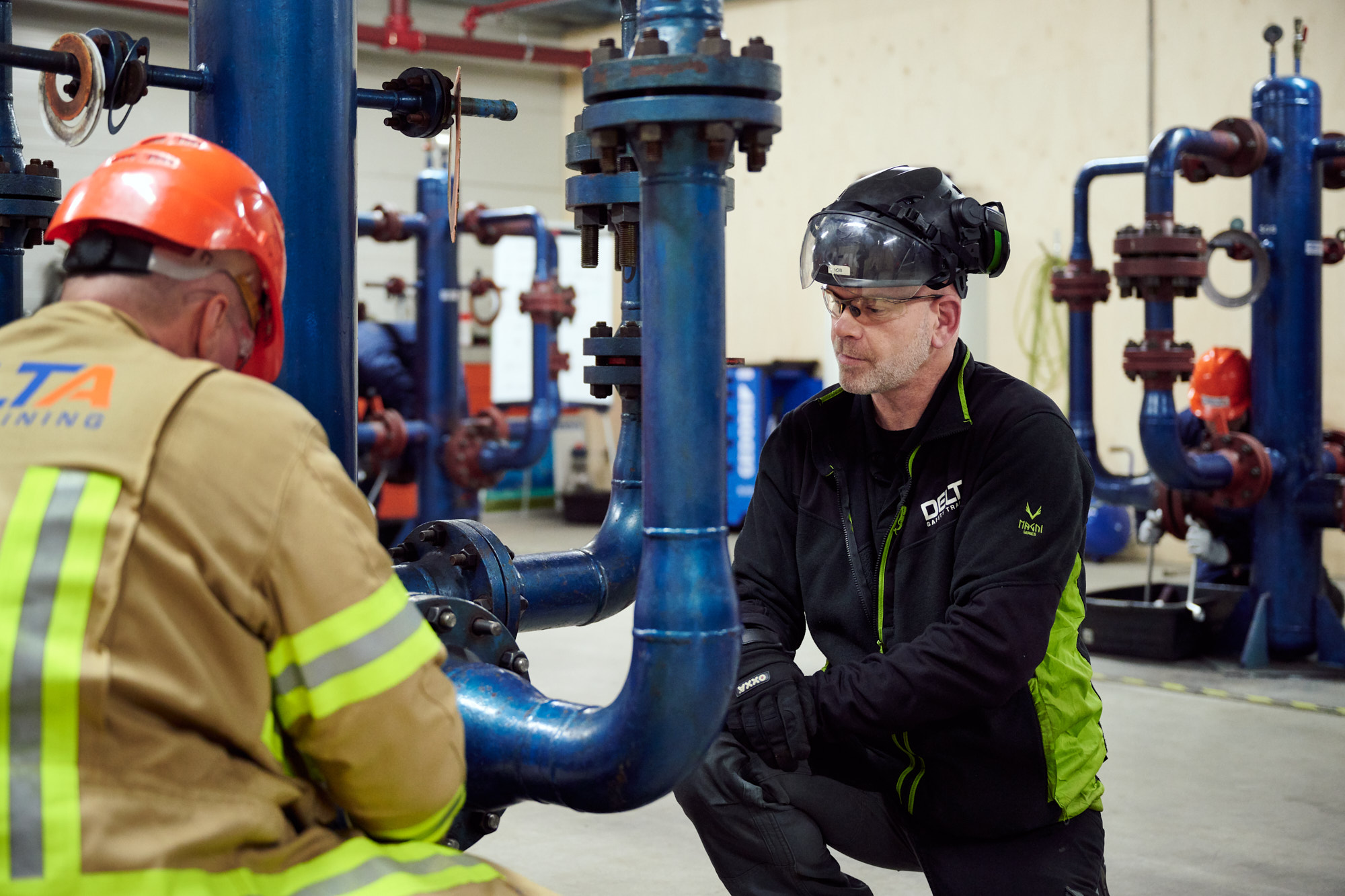
The Flange Fitter Blended Learning course (officially called Working on Flange Connections by Protocol) is designed for you if you work in industry and are tasked with opening and closing flange connections. In this course, you will learn how to open and close flange connections safely and responsibly.
The course consists of an e-learning (theory to be done at home at your convenience) + one-day practical day. You must complete the e-learning before you can start the practical day.
Take the step toward safe and certified working practices today.
-
The basic training course Working on Flange Connections according to Protocol (Blended Learning) consists of a theory and a practical part:
Theory
- Correct preparation of work on flanges
- Interpreting the rules of the Working Conditions Act
- Safety rules, work permits and internal rules
- Identifying flanges
- Identify Studbolts
- Gaskets identification, application and method of use
- Pipeline assembly
- Identifying equipment
- Identifying fittings
- Method and application of tools
- Opening and closing of flange connections
Practice
- Apply rules and procedures
- Safely tinker with flanges
- Working with the required tools
- Work with the necessary measuring instruments
- Inserting and pulling spectacle lenses or turning spectacle lenses
- Opening and closing pipe flange connections
Both the theoretical and practical part will be concluded with a test.
-
This training is a basic training, intended for people who have no experience as flange fitters.
Do you have sufficient knowledge of working on flange connections with Protocol? Then book a refresher training. -
- Dutch
- Would you like to take the training in another language? Then feel free to contact us to discuss the possibilities.
- The SSVV Training Guide (SOG) exam is available in Dutch and English.
The e-learning is currently only available in Dutch.
-
No. It is not necessary to undergo a medical examination before starting work.
-
- Minimum age 18 years
- If SOG exam - valid diploma B-VCA or VOL-VCA
- Before the start of the practice day, the e-learning be completed in its entirety. This will be checked in advance by DELTA Safety Training. In case of incomplete completion, access to the practical practical day will be refused.
-
- Valid identification, choice of:
- Passport
- Identity card
- Driving licence
- Valid identification, choice of:
-
- Digital certificate as proof of completion. A paper certificate will be not sent by default. However, if desired, you can receive a paper certificate at an additional cost of €25 excluding VAT. Read our blog article for more information.
- Fully catered lunch
- Coffee and tea
- Flange technician e-learning
- Exam
(Please note: The SOG exam has an additional cost. If you want a SOG exam, please select it in the booking form).
Take the step toward safe and certified working practices today.
To book you need:
- Contact details
- Name and date of birth of candidates
Can't find the right data? Please contact us.
-

DELTA
-

SOG